


Prime Video’s Abandoned: The Woman in the Decaying House dives into one of the most disturbing and complex abuse cases to have surfaced in recent decades. The series blends archival material, reenactments, and exclusive interviews to reveal how a Brazilian couple was accused of keeping a domestic worker in conditions amounting to modern-day slavery in the United States for nearly two decades. Despite Renê Bonetti‘s conviction and prison sentence, his wife, Margarida Maria Vicente de Azevedo Bonetti, managed to escape justice by fleeing to Brazil. Spiky TV looks into her background, the allegations against her, and her life today.
Early Life and Privileged Upbringing
Margarida Bonetti was born and raised in Higienópolis, one of São Paulo’s most affluent neighbourhoods. She grew up surrounded by privilege and influence. Her grandfather was a wealthy businessman and a baron who even appeared on local postage stamps. Her father, Dr. Geraldo de Azevedo, was a respected surgeon, and her Spanish-born mother, Lourdes de Azevedo, reportedly came from royal ancestry. This environment gave Margarida and her sisters every comfort, top-tier education, and constant domestic help.
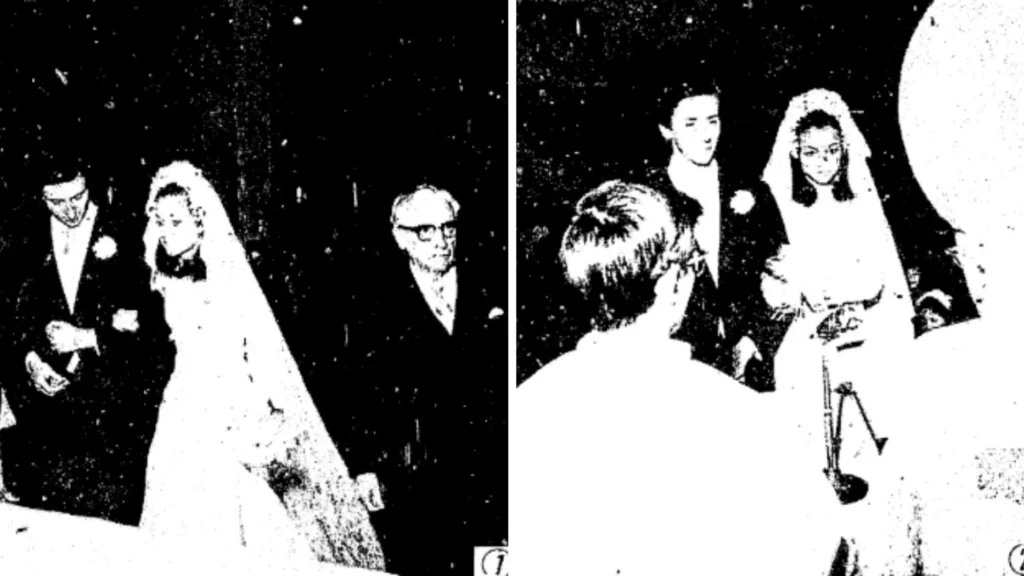
She earned a degree in engineering but decided not to pursue a professional career in the field. Instead, she became known as a well-connected socialite. In 1972, she married Renê Bonetti, a rising satellite engineer. The couple eventually settled in São Paulo’s suburbs and welcomed a son, Arthur. Life changed dramatically when Renê accepted a prestigious role in the United States with the telecommunications company Comsat.

Move to the United States with Domestic Worker Hilda dos Santos
In 1979, Margarida, Renê, and their young son relocated to Montgomery Village, Maryland, a quiet suburb near Gaithersburg. They did not make this move alone. At the suggestion of Margarida’s family, they brought along their domestic worker, Hilda Rosa dos Santos. Hilda had worked for the de Azevedo family since the early 1960s, starting when she was around 19 years old and Margarida was just a child.
The official reason for bringing Hilda was to help ease the adjustment to life abroad. However, what awaited her in Maryland was far from a better opportunity. Allegations later emerged that the Bonettis confiscated Hilda’s passport and visa shortly after their arrival, trapping her in the U.S. without documentation.
Allegations of Abuse and Harsh Treatment
Reports and court documents paint a disturbing picture of the Bonetti family and the conditions within. It’s alleged that Hilda was never compensated for her hard work, living instead in a cold, unfinished basement that was more of a prison and offered no proper bathroom facilities.
Her “bathroom” was a hole in the floor covered with plywood. Bathing was done with a metal tub that needed to be filled from upstairs. Her living conditions and her sleeping arrangements were equally poor. She used to sleep on a cot with a makeshift mattress that was a result of discarded materials. She was also given severely restricted access to food, as the refrigerator was kept locked.
Besides the aforementioned forms of neglect, Hilda faced severe physical abuse at the hands of Margarida. She faced slapping, punching, and hair pulling all the while facing severe medical neglect. Margarida, at no point, allowed her access to a medical professional.
Even if a person is gravely injured or unwell, medical help is a necessity and Margarida’s choice to withhold these basic rights is abhorrent. Hilda sustained a deep gash on her leg, which resulted in a serious infection. She also lived with an untreated abdominal tumour for several years. This tumor eventually grew to the size of 12 centimetres.
The Investigation and Margarida’s Escape
Hilda was able to leave the Bonettis’ house in early 1998 after 19 years of working for them, thanks to a neighbour who had become friends with her. This neighbour called the FBI, which led to an investigation into the case. Agents found out that Hilda had been living in a very controlled way, afraid of her bosses, and without basic rights and freedoms.
By September 1998, the Bonettis were aware they were under investigation. In October, Margarida travelled back to Brazil, reportedly citing her father’s death as the reason. Once there, she never returned to the United States. Brazil’s legal policy of not extraditing its nationals made it impossible for U.S. authorities to bring her back to face charges.

Federal Charges and Renê Bonetti’s Conviction
In 1999, both Margarida and Renê were federally indicted. They faced three counts of immigration violations for harbouring an undocumented person and one count of causing “serious bodily injury.” While Margarida remained in Brazil, Renê stood trial in February 2000.
Evidence presented in court showed that Hilda had not been paid during her nearly two decades in the Bonetti household. Witnesses testified to the poor conditions she endured and the control exerted over her life.
Renê was found guilty and sentenced to six and a half years in prison. He was also ordered to pay $110,000 in restitution to Hilda. Reports suggested that Margarida attempted to sell their U.S. home from Brazil and transfer assets to avoid restitution payments.

Life in Brazil After Fleeing the United States
After leaving the U.S., Margarida returned to her family’s large home in Higienópolis, living with her mother. Following her mother’s death in 2011, she remained there alone. The once grand property is now in bad shape, and the homes around it are well-kept, which shows how rich the neighbourhood is.
People who live near her say she is reclusive and doesn’t talk to many people. She is divorced from Renê and lives with two dogs, Ebony and Ivory. Reports say that she doesn’t go out during the day and only goes for walks at night. Sometimes she wears heavy white facial cream to hide her face.
In 2022, a Portuguese-language investigative podcast about the case turned Margarida’s home into a point of curiosity for the public. Some residents say that local children refer to her as “a bruxa” (the witch) because of her reclusive behavior and unusual appearance during her limited outings.

Mental Health and Public Perception
There has been speculation about Margarida’s mental health over the years. Some people think she might be having a hard time, but a police wellness check in the early 2020s found her to be mentally healthy, according to TheWashingtonPost. Still, her choice to live in almost total isolation keeps people interested.
Her story is still controversial in Brazil. Some people defend her, but many others see her as a symbol of impunity—someone who got away with breaking the law because of her nationality.
Ongoing Legacy of the Case
The Bonetti case has had a big impact on conversations about immigration laws, the rights of domestic workers, and modern slavery in the US. The fact that Margarida was able to avoid prosecution by leaving the country raises important questions about how countries work together to protect human rights.
The movie “Abandoned: The Woman in the Decaying House” on Prime Video has brought back public interest. It provides people like Hilda a chance to speak up and start deeper conversations about how vulnerable people can be taken advantage of behind closed doors.
Where is Margarida Bonetti now?
As of now, Margarida Bonetti continues to live in her late parents’ Higienópolis home. Despite the decaying condition of the property, she appears to have no intention of leaving. She maintains minimal contact with the outside world, with only occasional sightings when she walks her dogs. Her son reportedly lives nearby, and one of her sisters has attempted to sell the house, but no confirmed changes have been made.
For now, Margarida remains a free woman in Brazil, shielded by the country’s policy against extraditing its citizens. Her name, however, continues to be tied to one of the most shocking cases of domestic servitude in modern U.S. history—a case that still resonates today thanks to renewed attention from media, documentaries, and investigative podcasts.
Must Read: Linda Weston Now: The True Story of the “Basement of Horrors” Kidnapper